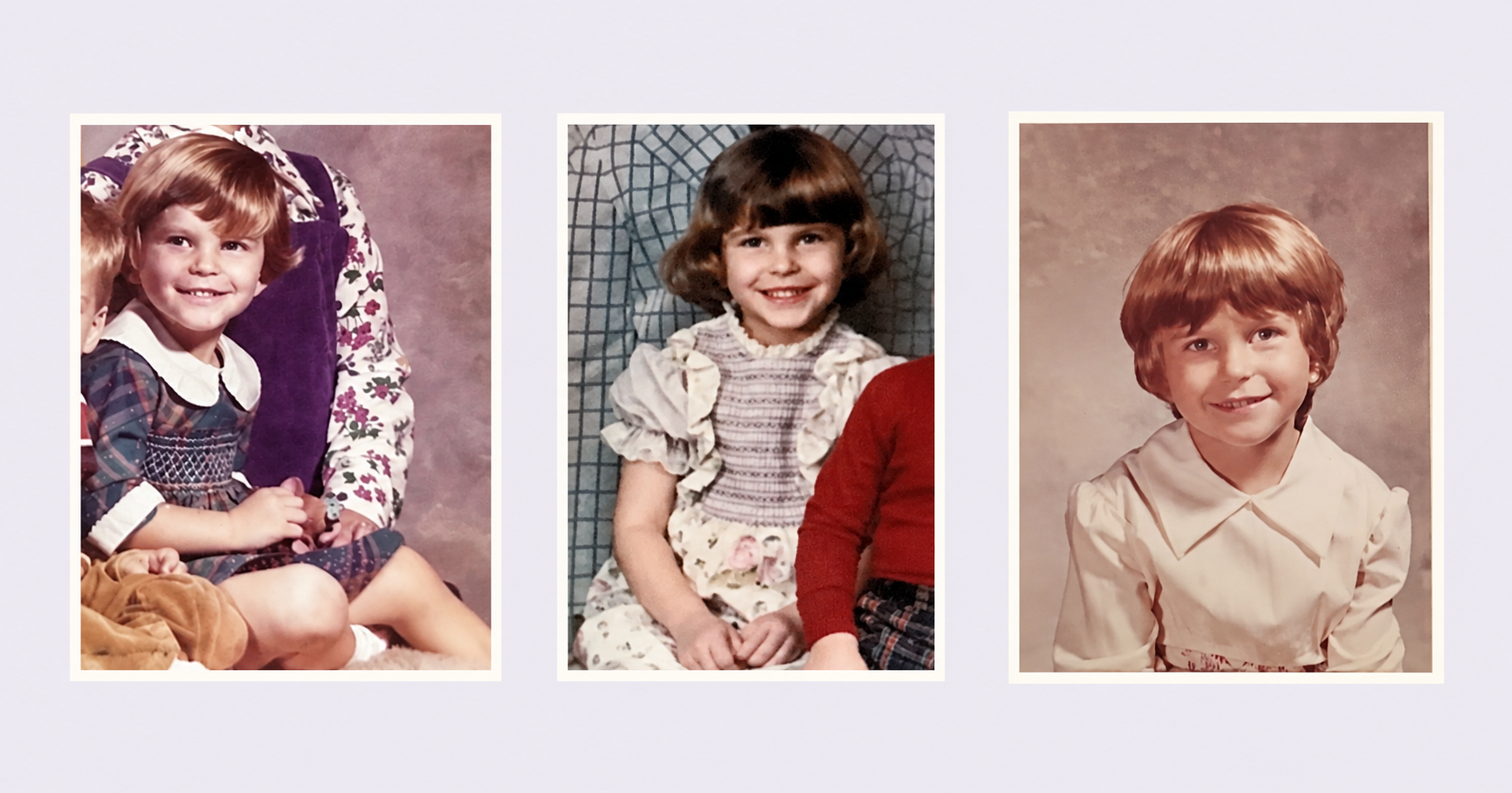
I’ve spent a lot of time lately thinking about the life behind that number. The home I came from, and the choices I made after.
For most of my life, celebrating myself didn’t come naturally.
I celebrated other people. I recognized what they had accomplished and reminded them how far they’d come. Extending that same recognition to myself was harder.
Maybe that’s because I grew up learning not to draw attention to myself.
I remember very little of my childhood. What I do remember is learning to adjust to things I couldn’t control. Until I was about 13 or 14, I lived in a home that wasn’t easy or safe. After that, my mother raised me and three of my siblings on her own.
Children who grow up in difficult homes learn things nobody teaches them. They learn to read a room before they walk into it. They learn to keep their needs small enough that no one has to step over them.
Those instincts follow you long after childhood ends. They make you dependable, and they make you the person others call when something has gone wrong. They also make it hard to believe there’s ever a moment when the attention is allowed to be on you.
For years I called that humility. Some of it was. Some of it was the belief that there was always one more thing I needed to fix before I’d earned the right to feel proud of myself.
A difficult childhood explains a lot. It explains our fears, and the ways we learned to protect ourselves, and it can leave wounds that take years to even recognize. What it doesn’t do is decide who we become.
We don’t choose the homes we’re born into. We don’t choose what the adults around us do or fail to do. But as we grow, the choices start belonging to us. Our past shapes us. It doesn’t get the final say.
I could’ve let parts of mine make me bitter. Some days I understood myself a little better than the day before, and some days I didn’t, but I kept at it.
I didn’t always make the right choices. None of us do. But again and again, I tried to choose differently. I chose responsibility when walking away would have been easier, and I chose to keep growing even when that meant facing things about myself that I’d rather not have seen.
And through all of it, there was my mother.
She carried responsibilities I didn’t understand until I was much older. She wasn’t perfect. Our life wasn’t perfect either. But she was my constant.
She kept going.
She raised children while carrying her own history and her own fears. I understand now what strength looked like in her. Getting up, going to work, making sure everyone had what they needed, and doing it again the next day.
She taught me that a person can come from hardship without handing hardship to everyone who comes after them. She didn’t do it perfectly, but she took responsibility and kept trying.
She held onto her faith her whole life. And she used to tell me about a song.
There’s a song called “Tracy” that came out in July of 1969, a few weeks before I was born. By that October it was in the top ten and you couldn’t get away from it. A bright, silly little pop song with my name in it.
I don’t remember her singing it. I’ve already said I remember very little from back then. But she told me about it my whole life, how she used to sing it over me when I was a baby, and kept singing it to me when I was little, the part about how being near somebody you love can lift you clean off the ground.
That’s the piece of it I keep thinking about. I don’t have the memory. I have my mother telling me about the memory. She held it for me until I was old enough to be handed it, and now she’s gone and the telling is the only place it lives.
I think a lot of us are carrying things like that. Not all of them are sweet.
No matter how old I got, knowing she was somewhere in this world, somewhere I could see her and talk to her, made me feel less alone in it. For 52 years, she never missed wishing me a happy birthday.
She knew every version of me. The child I barely remember. The teenager trying to understand her own life. The young woman making mistakes and still looking for her place. She was the only person whose heartbeat I’d heard from the inside.
On May 5, 2022, after 45 days watching her fade in a hospital bed, while silently begging and praying for her to get better so she could come home, my mother went to Heaven.
For the first few years after, and sometimes even now, I couldn’t understand how I was supposed to keep going on this earth without her. That’s the only way I know how to explain it.
She had always been there. Then she wasn’t.
I had to learn to live in a world that no longer included the one person who had been part of every version of me.
I’ve written before about grief and about losing my brothers and my mother. Those losses are part of my life and always will be. But this isn’t mainly about death. It’s about what came before it, and what’s left after it. It’s about the values my mother lived in front of me, and the choices we still have even when life hasn’t been fair.
Most of what I’ve told you here, nobody watching my life would have known. Whole families work the same way. For a long time, I thought mine was the only one like ours. Everybody else’s house looked fine from the road. I’ve since learned that just about everybody thinks that about their own family, which tells you how good all of us are at the view from the road. Every family has something, because every family is made of people, and people are imperfect. It isn’t the same thing in every house, and it isn’t the same weight, but it’s there.
I have learned not to assume I know what someone else is carrying.
I have found out things about people I’d known my whole life, and more than once I found out too late to be any use to them. Not strangers. People I loved and saw regularly. Every time, my first reaction was that I should have known. Every time, the honest answer was that I couldn’t have, because it was theirs to share if they wanted to share it at all.
Some of what people carry is happening to them right now. Some of it happened thirty years ago and never came up.
We meet people long after life has already changed them. We also meet them long after they have started deciding what to do about it.
We see a photograph, a résumé, a post online, and we think we know the life behind it. We don’t see the childhood that taught someone to disappear. We don’t see the private grief, or what it sometimes took just to get through an ordinary day.
And here’s the part I keep coming back to. Whatever any of us is carrying, we still get to decide how we move forward with it. We don’t get to decide whether it happened or whether it hurt. We decide what we do from here.
That’s made me slower to judge. It’s also made me more honest about responsibility. Compassion doesn’t require pretending our choices don’t matter. Understanding where someone came from doesn’t mean excusing what they do with it. People can be deeply affected by what happened to them and still be accountable for what they choose to do with the pain.
Most of us reach crossroads nobody else sees. Moments when bitterness would be understandable. Moments when repeating what we were shown would take less effort than choosing something else.
Sometimes the better path isn’t the easier one. It can mean unlearning what once kept you safe, or apologizing, or setting a boundary, or refusing to hand an old wound to somebody else.
Those choices rarely get applause. There’s no ceremony for breaking a pattern. No award for turning out gentler than what shaped you.
They still count.
A song called “Celebrate Me” got to me because it said something I hadn’t been willing to say out loud. Surviving matters. So does who you decide to be while you’re surviving.
Celebrating myself doesn’t mean pretending my life has been easy, or that every wound has healed, or that I got everything right.
It means I can look honestly at where I began, what I carried, who loved me, what I lost, and the decisions I kept making. All of it is mine.
At 57, I can celebrate the child who learned to adapt to a life she didn’t choose.
I can celebrate the daughter of a mother who kept going.
I can celebrate the woman I’m still becoming.
That doesn’t erase where I started. It measures the distance.
This story is about where I came from, but it isn’t the whole story. I’ve been carried by people who loved and supported me the whole way, most of all my husband of nearly twenty years, whose belief in me has meant more than I know how to put into words.
If you’re reading this and you’re carrying something the people around you know nothing about, I won’t pretend to know what it is. But you’re still here, and you still get to decide what comes next. Nobody’s going to hand you a ceremony for it. It counts anyway.
So today, I’m celebrating turning 57.
I’ll celebrate my mother, not only because I miss her, but because most of what’s good in me came from loving her and being loved by her.
I didn’t choose every circumstance that shaped my life. I chose a lot of the steps that came after.
I chose to keep loving after loss. I chose to keep believing that where we start doesn’t have to decide where we end.
I chose to keep going.
And this year, without apologizing for it, I choose to celebrate me.
A note on the song: “Celebrate Me” is credited to IngaRose, which turns out to be an AI music project rather than a person. I didn’t know that when I first heard it. I’ve thought about whether it changes anything, and I’ve decided it doesn’t. The words found me at the right time, and they helped. Where they came from is its own conversation.
No responses yet